Unless you’ve been living under a thousand rocks, you've probably heard that Charli xcx just dropped her seventh studio album. (I’m a big fan!) And, if you’re leading a marketing team, the rollout of Music, Fashion, Film is worth paying attention to – because rarely do global pop stars squeeze just as much juice into the marketing campaign as they do the music.
And, before you say, “WhAaAat does a pop star know about maAaArketing??”
Charli has some serious marketing chops.
For the historians out there, Charli’s 2024 release Brat spawned the infamous “Brat Summer” – a “summer” that lasted nearly two years, marked by an offensive shade of green, intentionally lo-res font, a devil-may-care (sorry, language) attitude, night shades, and brash club-ready hits. The era was a masterclass in marketing. From pop-up shows announced an hour before they happened to sneaky murals appearing overnight in Brooklyn to visuals and remixes that shook culture while appearing effortless, each tactic built a world that was entirely Brat. And brands jumped in – whether we wanted them to or not.
So what’s the strategy for this album cycle?
Anti-marketing.
Which is just a bratty way of saying: *Less marketing that looks like marketing.*
"I truly believe anti-marketing will become a thing soon... still marketing but it's just a different approach, more intimate, personal, private, one on one. Less about the projection of scale."
She continues …
“We’re so saturated with bombastic, over-the-top campaigns about engagement … public events and pop-ups. Making [products] feel 3D in every possible outlet. Which is cool. But it’s done.”
Yep, the pendulum is swinging back.
Charli argues that because these tactics worked, everybody and every brand jumped on. Fans and consumers have learned the language of in-person events, cheeky stunts, and larger-than-life takeovers – making it feel familiar and no longer cool or captivating. She points to fellow artist Phoebe Bridgers, who played a surprise show at Madison Square Garden with absolutely no devices, as “shocking.”
I wouldn't blame CMOs for seeing thousands of fan-generated videos as a win. But the real wins were the headlines, debate, and FOMO that exploded after the show. Phoebe’s no-phones show generated more and a different kind of attention than a slew of annoying concert clips on Instagram stories ever could. (Uh oh, I’m editorializing!) You had to be there. If you were, you’re a fan for life. And if you weren’t, now you have to read about it. And nothing is WORSE!! (Thanks for reading.)
Charli predicts the best campaigns of the year will reward curiosity and desire. And anti-marketing is the reward center.
Here's how she fostered both via intentional world building, insider-only content, and in-person events that prioritized fan-relationships over attention grabs.
To launch Music, Fashion, Film, Charli revealed album artwork featuring John Cale, Marc Jacobs, and Martin Scorsese together in one shot. The photo was a news story in itself because HOW. It immediately became a visual manifesto for the project's three creative territoties. (Music, Fashion, and Film – keep up!) She followed it with a provocative Vogue quote: "The dance floor is dead." For fans, the heretical statement caused global meltdown, sparking immediate debate and speculation about what she’s cooking. The high-profile press mentions wrote themselves.
To create 1:1 moments with fans and large-scale FOMO, Charli launched a private Instagram account that only lets in new followers a few times a year. This account, called “b-sides,” dropped exclusive tracks that'll never hit streaming. Fans who got infelt "early" to the next era and had a direct line to Charli in a way the masses couldn't.
Charli also announced intimate listening parties at independent record stores and movie theaters across the country, and created Sundance-ready visuals for each track that needed to be dissected and digested instead of binged and tossed.
That's what anti-marketing looks like in practice for a pop star, but what does it look like for your brand? Here's our cheat sheet to help you get there before everyone else catches on. You don’t want to be the next stunt that earns a collective eye roll.
Doing anti-marketing well means unlearning many of the habits we built our careers on.
Remember: The goal isn’t to reach everyone immediately – it’s to empower your super fans to spread the good word.
Here’s how to do this well – backed up by Charli’s album rollout.
Your audience doesn't want to feel targeted by the algorithm – they want to feel like they found it first. We all know that feeling of catching on early is intoxicating – and the best campaigns turn this up to 11 by creating a sense of discovery, FOMO, and insider knowledge.
Make something worth stumbling upon. Ooze confidence by keeping it small. Tease your audience and then actually deliver.
When fans feel early, they're more likely to tell everyone and their mother (who traditionally makes household purchasing decisions!!) because it reflects well on them, not just on you.
You know what the kids say: "More is more" and "If you know, you know."
Build for your biggest fans first, reward their attention, and prepare to feed the beast. Start a burner Instagram account with exclusive content. Go hard in your DMs. Drop super limited merch. Design pop-ups for connection instead of crowds.
Nows the time to put that media budget where your fans already hang out instead of throwing spaghetti into the crowd. Lean into the organic social channels you've hopefully been intentionally crafting for years. (And if not, call Ashley Walters.) When you pull the right levers, it's amazing the kind of back-breaking key board labor your fandom will take on for free.
If it’s executed well, it’ll reach the masses.
After all we live in a 24-news cycle, and it's like, such a bummer out there.
The burn rate of content today would make any reasonable CMO burst into tears. Putting all your creative energy behind a :30 and a couple of :15s won't shape culture. Spread that creative budget across thoughtful, lo-fi moments and dangle it in front of your ambassadors face (and feeds).
Spark a debate, subvert expectations, or create visuals that a worth a rewatch or two. Uncomfortably authentic BTS and unconventional, long-form content will get the people talking and do a surprising amount of heavy lifting.
The album wasn't Charli's first step into music, fashion, or film – it was the result of years spent deliberately building street cred in all three. Scoring soundtracks, starring in films, and becoming known for big fashion moments drew in new fans by the masses. And not in a gross, cash-grab way. It was slow, persistent, and authentic to her artistry.
What world is your brand building – and why would anyone want to hang out in it? Find a few territories and bring a brick, this is the long game.
Good luck, report back.
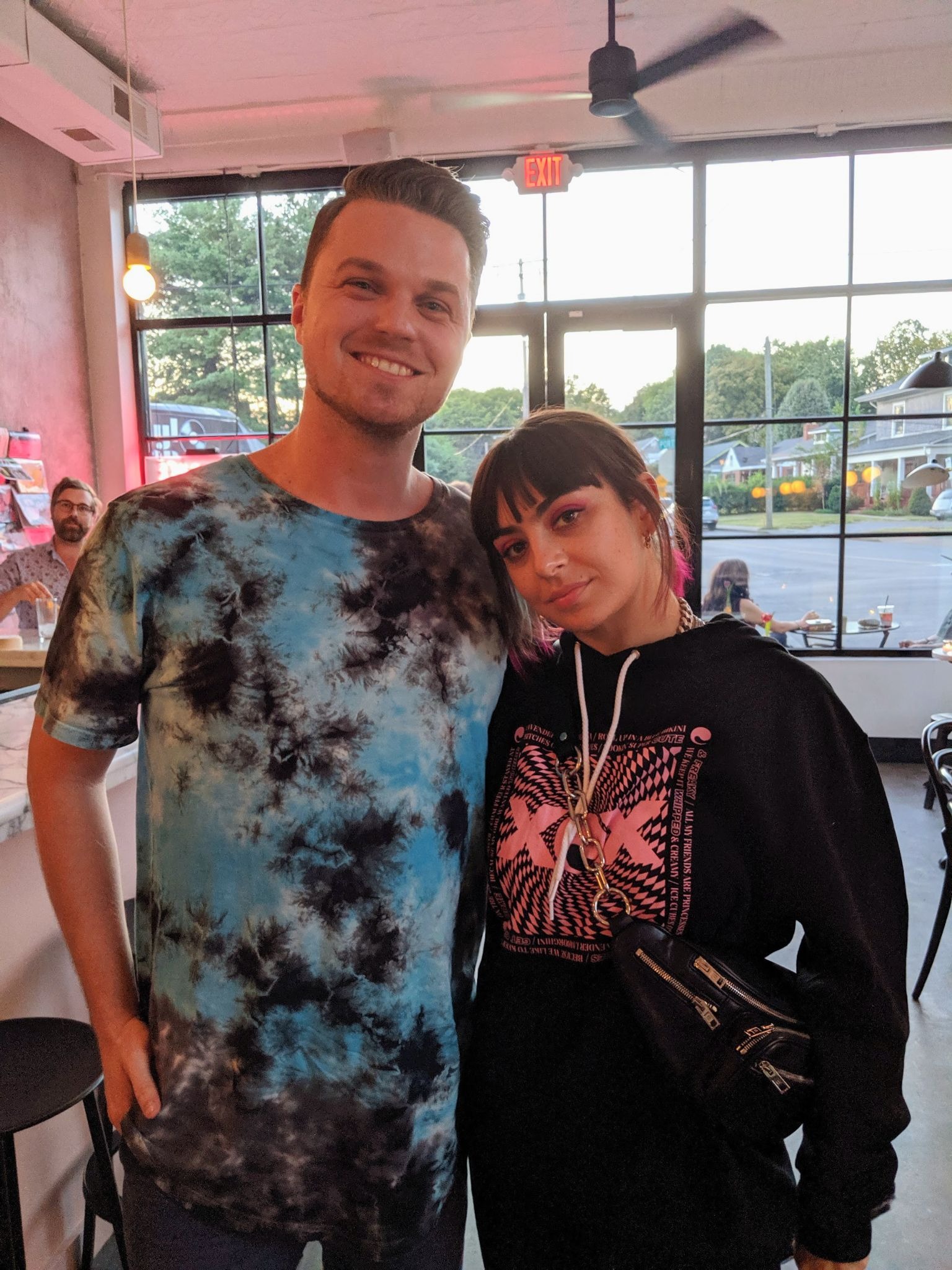
If you made it this far, I'll “reward” my “biggest fans" with this photo of Charli and me at Cafe Rose in Nashville. She was on tour. I was on set for a Bush's Beans shoot.


.png)